
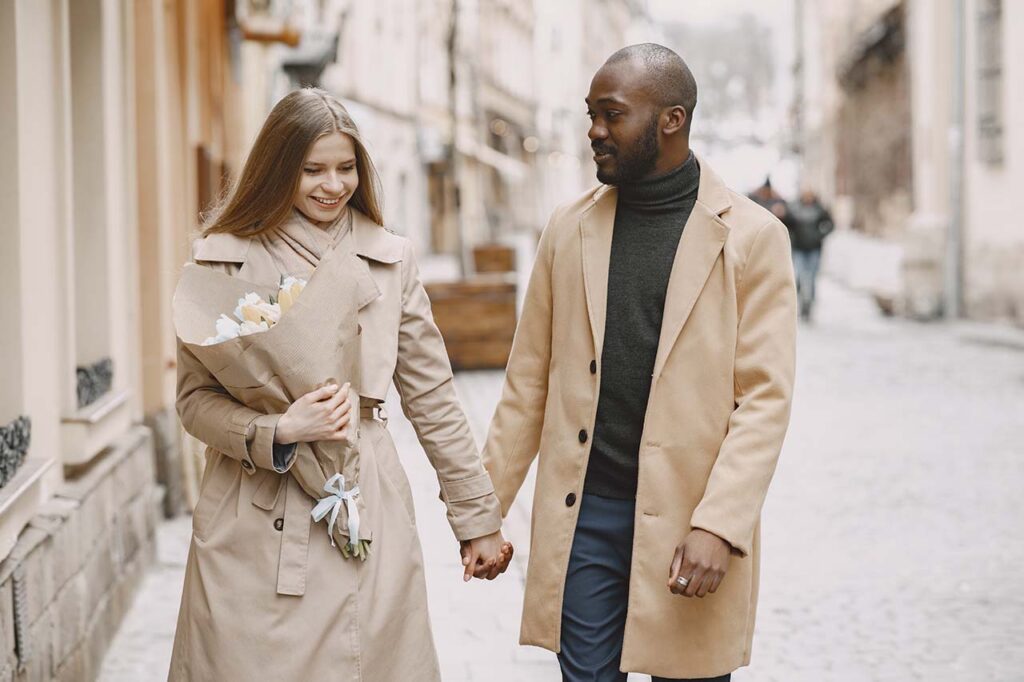
I was sitting in a crowded Filipino restaurant in Daly City last week, the kind of place where the air smells perpetually of garlic fried rice and vinegar, when I noticed the familiar ripple of a “double take.” A white woman walked in holding hands with her Southeast Asian husband. She was a few inches taller than him, and the silence that followed them to their table wasn’t exactly hostile, but it was heavy. It was the sound of a hundred mental calculators trying to solve an equation that the West has spent a century making sure nobody can get right. In the hierarchy of our desires, we like to pretend we are the sole authors of our “type,” but if you look closely at who is getting the “stares” and who is getting the “swipes,” you start to see the fingerprints of history all over our bedrooms.
For decades, the pairing of a white man and an Asian woman has been the background noise of Western life. It is so common that we stopped asking why. But the inverse, an Asian man with a white woman, still feels like a glitch in the Matrix to many. This isn’t a coincidence or a natural biological lean. It is the result of a very specific, very intentional branding campaign that started in the 1940s. We talk about “white worship” as if it’s a personal character flaw, a shallow reach for status, but that ignores the reality that for three generations, the dating market was rigged by military policy and Hollywood tropes before most of us were even born.
The Ghost of the War Brides Act
Dating isn’t just about chemistry, it is a byproduct of foreign policy. Between 1941 and 1975, millions of American men were shipped to East Asia for three major wars. They didn’t just bring back stories, they brought back wives. The US government effectively “normalized” the Asian woman as a romantic option for the white “hero” through acts like the War Brides Act, while simultaneously passing laws like the Page Act to keep Asian women from immigrating on their own. We created a world where the Asian woman was a prize to be brought home, and the Asian man was a ghost to be avoided. When you see an older white man with a younger Asian woman today, you aren’t just seeing a couple. You are seeing the long, flickering tail of 20th-century propaganda that told us who was allowed to be a romantic lead and who was relegated to the “nerdy sidekick” role.
Status as a Social Life Raft
Let’s be honest about the “status” element. In a country where whiteness is still the default setting for power, dating white can feel like buying a social insurance policy. For many first and second generation immigrants, the urge to “fit in” often manifested as a desire to marry into the majority. It wasn’t always about a lack of love. It was about safety. If you marry the “White Prize,” you’re not just getting a partner, you’re getting a shortcut to the middle class and a shield against the “otherness” that followed your parents. This internalized hierarchy creates a weird, quiet tragedy where people end up chasing a skin tone because they’ve been convinced their own reflection is a liability. It’s not “worship” in the religious sense. It’s a survival tactic that we’ve mistaken for romance.
The Short King and the Height Gatekeepers
The controversy isn’t just about race, it’s about the rigid physical “defaults” we refuse to let go of. The cultural mandate that the man must be taller and more “rugged” than the woman has acted as a silent gatekeeper against Asian men for years. Because Southeast Asian men are, on average, shorter than their white counterparts, they are often disqualified before they even open their mouths. I’ve heard men in Silicon Valley talk about how they feel they have to earn twice as much and work out twice as hard just to “compete” for the same attention. When a woman breaks that norm, like the couple in Daly City, she isn’t just dating a man. She is actively dismantling a physical hierarchy that says masculinity is measured in inches. The “stares” they get are often just people being confronted with the fact that their “preferences” are actually just a set of unexamined rules.
The Hallyu Wave and the Gen Z Flip
But the algorithm is finally breaking. If you talk to a 19-year-old today, the “desexualized Asian man” trope of the 90s is ancient history. They didn’t grow up on Long Duk Dong. They grew up on BTS and K-dramas where the Asian man is the “pretty boy,” the romantic lead, and the ultimate heartthrob. For Gen Z, the Asian aesthetic is high-status social capital. We are watching a total rebranding of masculinity in real-time, where “soft” features and impeccable style are replacing the old, rugged cowboy archetype. This shift proves that our “types” are incredibly fragile. Change the media, change the status of the culture, and suddenly the “least preferred” demographic on a 2014 dating app becomes the most-swiped aesthetic of 2026. We are finally moving into an era where the “white prize” is losing its luster, not because of a lecture on diversity, but because the world finally found a better spotlight for everyone else.